For German families and the German diaspora
Design a German Family Crest
Black eagles on gold, bears, boars, millers and smiths: design a crest with a German feel, and learn why German heraldry has always belonged to ordinary families as much as to knights. Designing is free and needs no account. When you love it, $9 gets the whole set: print-ready art (4000 px PNG and SVG), a certificate of arms explaining its meaning, a profile picture and a phone wallpaper. For a family gift or a wax seal, the $19 Heirloom set adds an engraving, seal, bookplates and a house banner. For a club, team or business, the $29 Logo Kit adds logo, icon, banner and brand files.
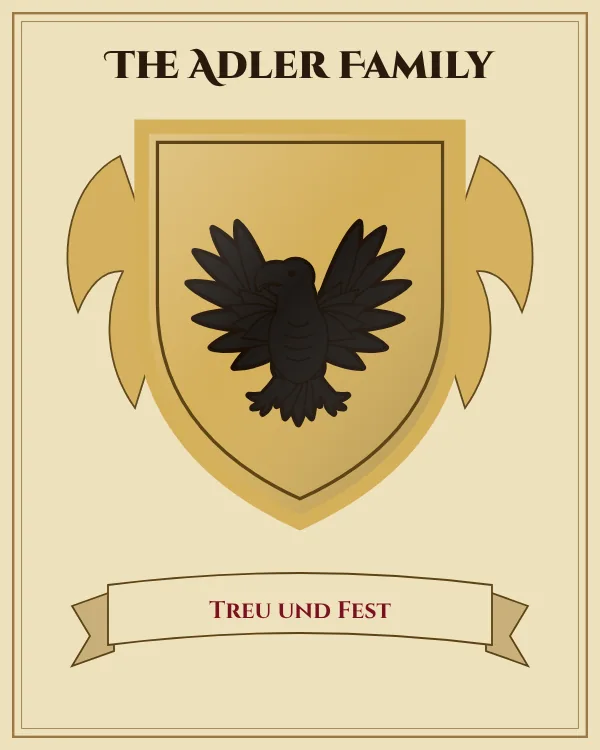
Treu und Fest
Customize this crest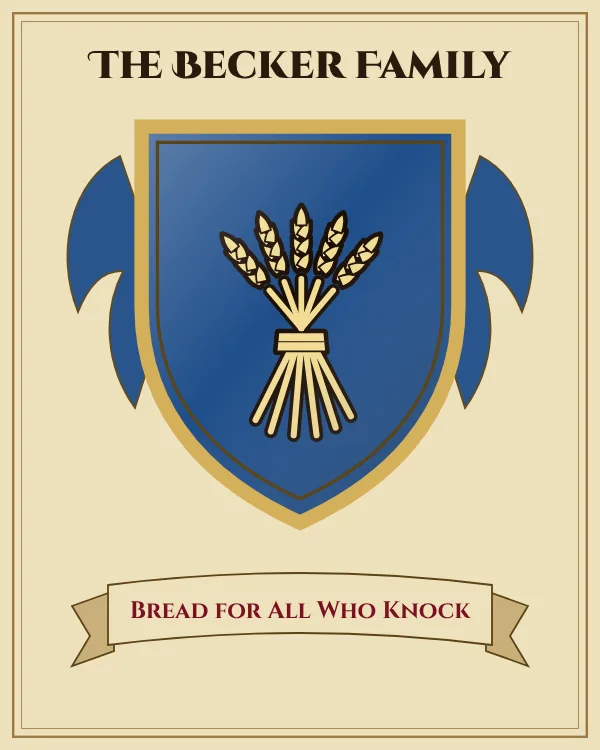
Bread for All Who Knock
Customize this crest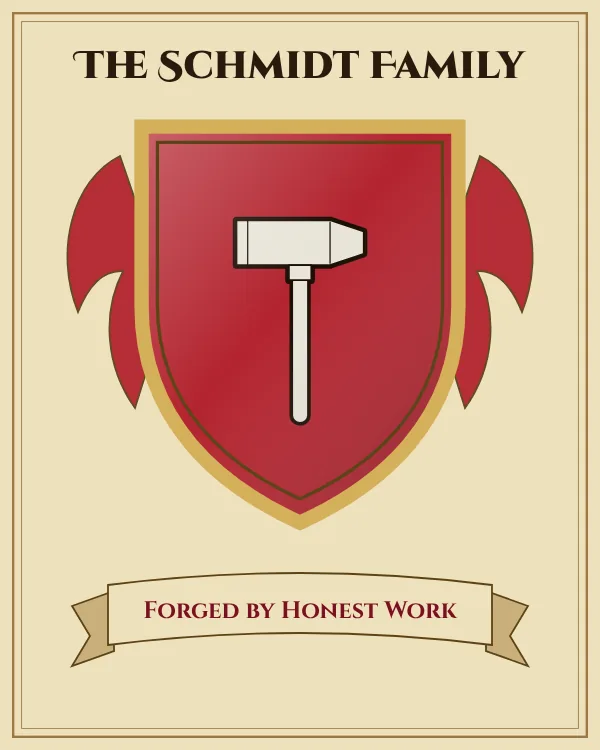
Forged by Honest Work
Customize this crest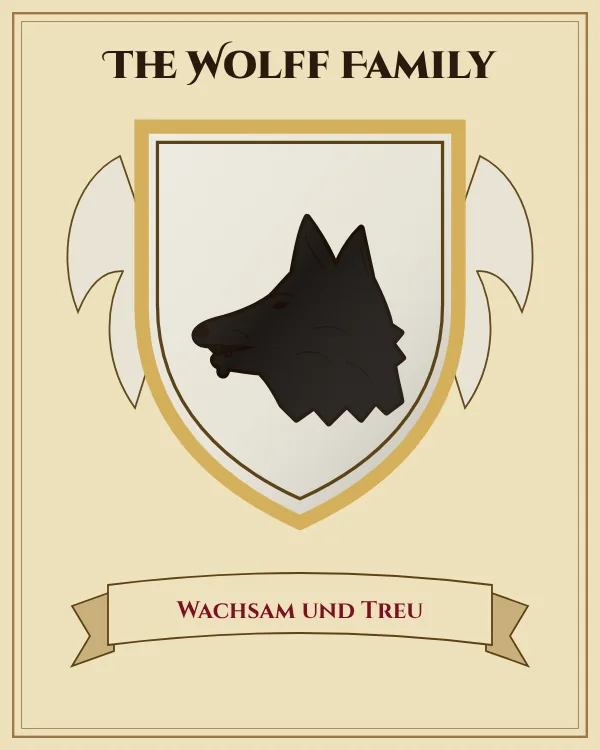
Wachsam und Treu
Customize this crest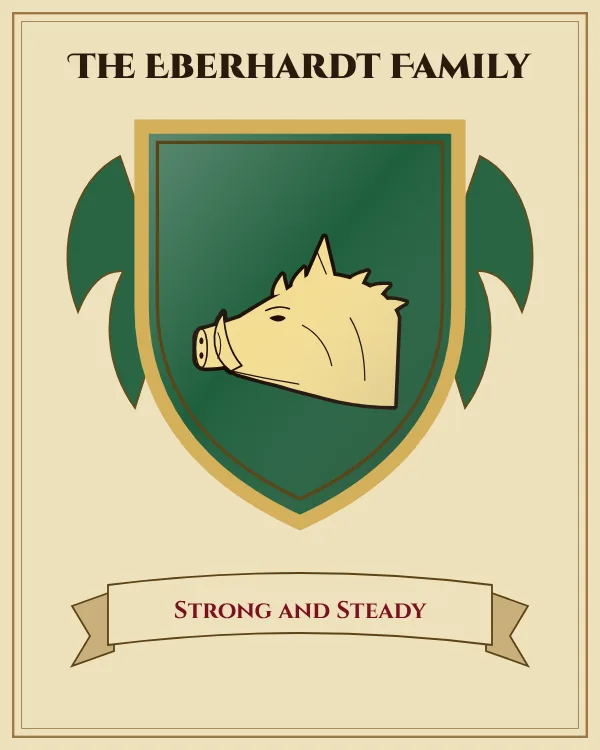
Strong and Steady
Customize this crestFirst, the honest part
Search for "the Schmidt coat of arms" and you will find shops selling one design as if it belonged to everyone with the name. German heraldry does not work that way. A Familienwappen (family coat of arms) belongs to one family line and passes to the descendants of the person who first took it, not to every stranger who happens to share the surname.
Germany is also unusual in a way that works in your favor. The state never regulated the arms of ordinary citizens, so anyone in Germany has always been free to adopt a coat of arms of their own, as long as they do not take arms that already belong to someone else. These are called burgher arms (Bürgerwappen). Townspeople and craftsmen began using them in the 13th century, and some farming families followed in the 14th. The emperors of the Holy Roman Empire also granted arms to commoners, a privilege later handed to court officials known as Counts Palatine.
The tradition is still alive. The HEROLD, a Berlin heraldry society founded in 1869, has kept a register called the Deutsche Wappenrolle since 1922. Families who design new arms can submit them for review and registration for a fee, and the society follows the principle "one family, one coat of arms". Registration is optional, but it shows how normal it is in Germany for a family simply to create its own arms. Designing yours is exactly that tradition.
What your surname can tell you
The largest group of German family names comes from jobs. Müller (miller) is the most common surname in Germany, followed by Schmidt (smith), and the list goes on with Schneider (tailor), Fischer (fisherman), Weber (weaver), Becker (baker) and Wagner (wagon builder). That is good news for a crest, because burgher arms were famous for showing tools and everyday objects that knights never used. A smith's hammer, a baker's wheat sheaf or a key for a locksmith is as authentic a German charge as any eagle.
Canting arms: the German love of a visual pun
German heralds call them redende Wappen, "speaking arms": a picture that sounds out the family or town name. They are especially common in German civic heraldry:
- Berlin: a black bear, Bär, on silver. The city name actually has Slavic roots and nothing to do with bears, but the pun stuck. See the bear coat of arms guide.
- Eberbach: a boar, Eber, above a wavy band for the brook, Bach.
- Wolfsburg: a wolf on a castle, "wolf's castle".
- Albrecht Dürer: the painter's family arms show an open door. The family came from the Hungarian village of Ajtós, from ajtó, "door", and the German name Dürer echoes Tür.
If your name contains a beast or an object (Adler is eagle, Wolf, Fuchs is fox, Hirsch is deer, Baum is tree, Stein is stone), you have a ready-made canting crest.
German symbols and colors
The black eagle on gold
The federal arms of Germany, the Bundeswappen, show a black eagle with red beak, tongue and feet on a gold shield. It goes back to the medieval eagle of the Holy Roman Emperors, was used by the Weimar Republic from 1919, and was adopted again by the Federal Republic in 1950. Prussia used a black eagle on silver. Because the federal arms belong to the state, give your own eagle crest its own name and motto rather than copying them. The eagle coat of arms guide explains eagles from Rome to today.
Colors
The German names for heraldic colors are simple: Gold, Silber, Rot, Blau, Grün and Schwarz. Black on gold is the most German-looking pairing of all, and black on silver recalls Prussia and Berlin. Every example on this page keeps heraldry's rule of tincture: a metal (gold or silver) against a color, never color on color.
Crest, helmet and the word "crest"
In German arms the crest proper, the Helmzier sitting on top of the helmet, is unusually important, and it often repeats the shield's colors or figure. In everyday English "family crest" just means the whole design, which is how Crest Studio uses it: a shield with your emblem, your family name and a motto.
Mottos
A motto suits a modern crest. Simple German lines include Treu und Fest (loyal and steadfast) and Wachsam und Treu (watchful and loyal), or write your own in English. The Latin motto generator has more ideas, and mottos in the Studio can be up to 48 characters.
Questions
Is there an official coat of arms for my German surname?
No. A German family coat of arms belongs to one family line and its descendants, not to everyone with the same surname. Common names such as Müller and Schmidt are shared by many unrelated families.
Can I create my own family coat of arms in Germany?
Yes. The arms of ordinary citizens were never regulated by the German state, so families have always been free to adopt new arms as long as they do not copy arms that already belong to someone else. You can optionally register them with a heraldry society such as the HEROLD, which keeps the Deutsche Wappenrolle.
What is the German word for family crest?
Familienwappen, or simply Wappen for a coat of arms. Arms of townspeople and craftsmen are called Bürgerwappen, burgher arms.
What are the German heraldic colors?
Gold, Silber (silver), Rot (red), Blau (blue), Grün (green) and Schwarz (black). The federal arms of Germany are a black eagle with red beak, tongue and feet on gold.
What are canting arms?
Arms that make a picture pun on a name, called redende Wappen in German. Berlin has a bear (Bär), Eberbach a boar (Eber), and a family named Adler might choose an eagle.
Free to play, no download
Medieval games
Take a break from heraldry: eight free games, from a trebuchet siege to Viking chess. Your coat of arms rides with you in every one.
 The Usurper
 Trebuchet siege
 Viking chess
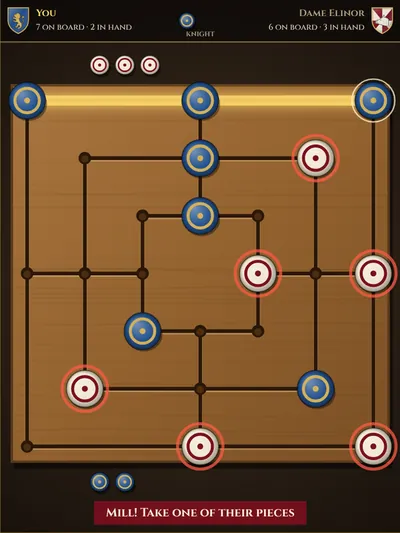 Nine Men's Morris