For Polish families and the Polish diaspora
Polish Coat of Arms: Herb, Clans and Your Own Crest
In most of Europe a coat of arms belongs to one family. In Poland, one coat of arms could belong to hundreds. Here is how the Polish herb and its heraldic clans work, and how to design a crest with a Polish feel that is truly your own. Designing is free and needs no account. When you love it, $9 gets the whole set: print-ready art (4000 px PNG and SVG), a certificate of arms explaining its meaning, a profile picture and a phone wallpaper. For a family gift or a wax seal, the $19 Heirloom set adds an engraving, seal, bookplates and a house banner. For a club, team or business, the $29 Logo Kit adds logo, icon, banner and brand files.
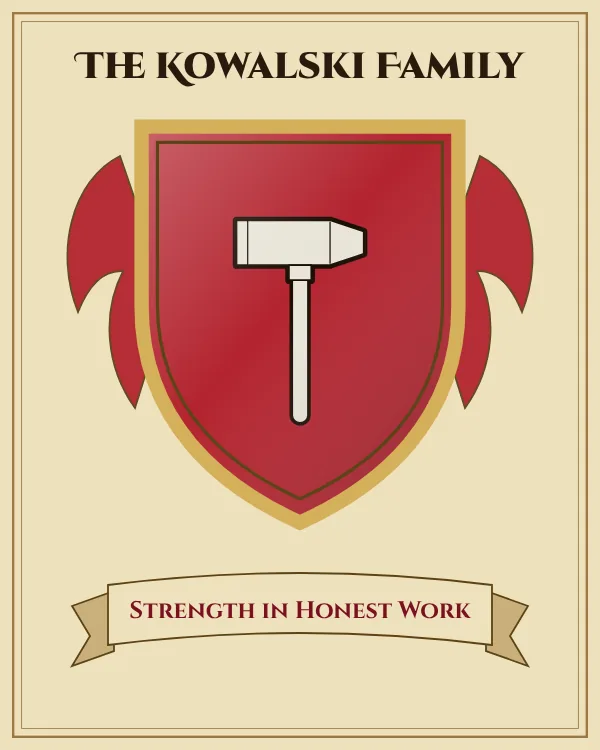
Strength in Honest Work
Customize this crest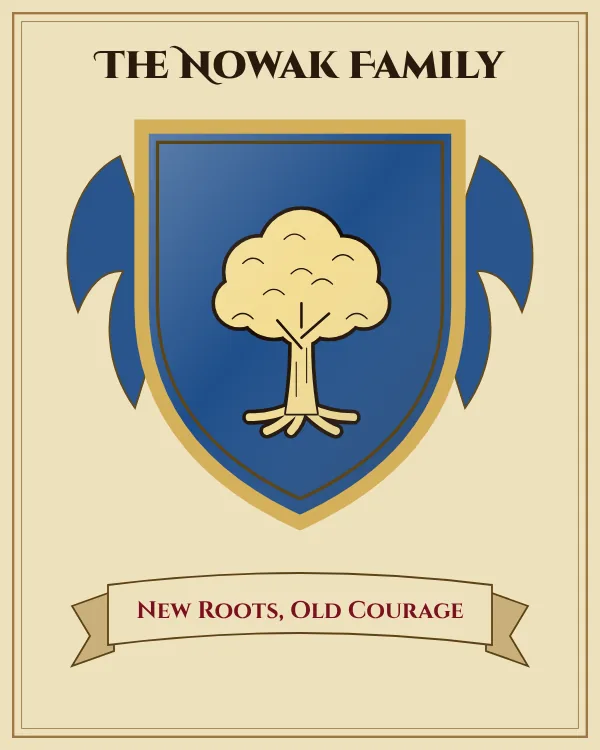
New Roots, Old Courage
Customize this crest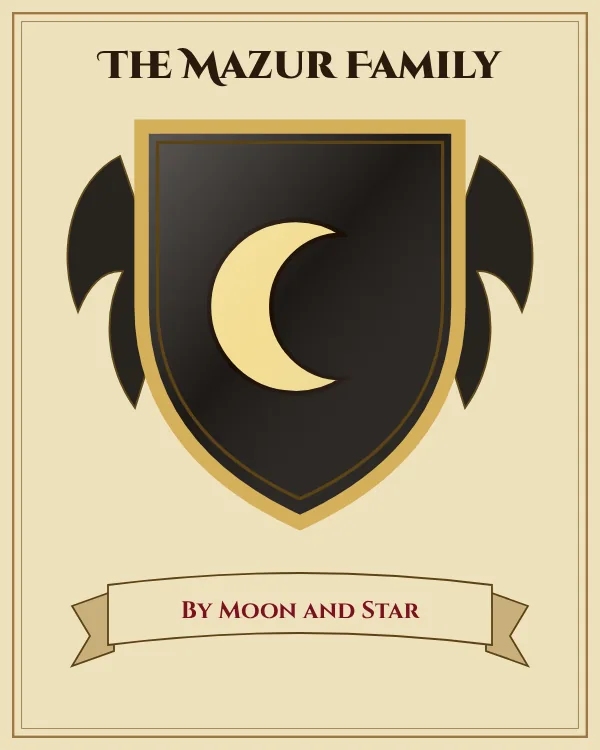
By Moon and Star
Customize this crest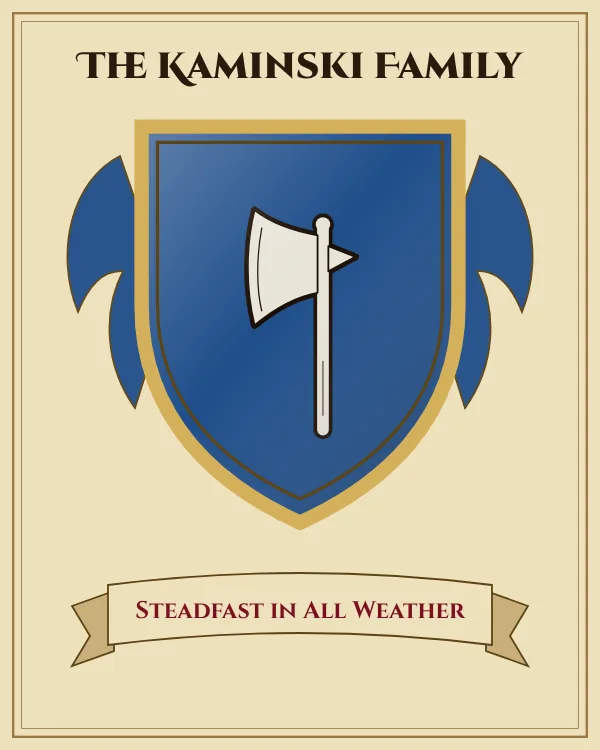
Steadfast in All Weather
Customize this crest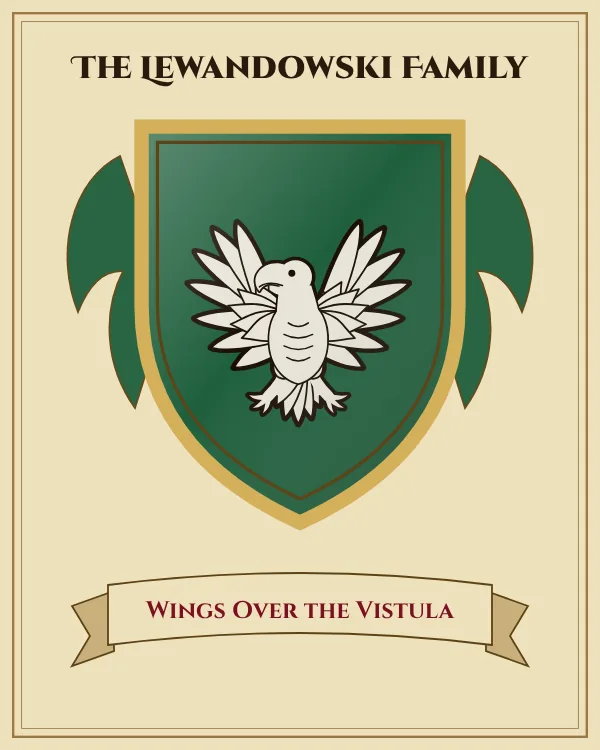
Wings Over the Vistula
Customize this crestThe Polish herb: one coat of arms, many families
The Polish word for a coat of arms is herb. It came into Polish through the Czech erb, from the German Erbe, "inheritance", and it first appears in a royal document in 1415. What makes Polish heraldry different from almost everywhere else is who could use a herb.
In England, Scotland or Germany, a coat of arms belongs to one person or one family line. In the old Kingdom of Poland and the Polish-Lithuanian Commonwealth, all the noble (szlachta) families who bore the same arms formed a heraldic clan, a ród herbowy. Members of a clan were often not related by blood at all. A clan's arms could be shared by several dozen families, and several hundred was not unusual. Armorials list more than six hundred surnames under the Topór arms and more than eight hundred under Leliwa.
Each herb also has its own name, which usually comes from the clan's battle cry, its ancestral seat or a pun on the picture. That is why you will see a Polish noble written as, for example, Jan Kowalski herbu Topór, "Jan Kowalski of the Topór coat of arms". The surname and the arms are two separate things.
How families joined a clan
Clans grew by adoption. The most famous example is the Union of Horodło in 1413, when 47 Lithuanian noble families were adopted into 47 Polish heraldic clans and began to use their coats of arms. Foreign families who were granted Polish nobility, called indygenat, joined the system the same way. Over the centuries, adoptions and grants turned nearly every Polish clan into a heraldic clan of unrelated families rather than a single bloodline.
Many Polish charges also look unlike Western heraldry. Lots of them grew out of old linear property marks, and they were simplified into the horseshoes, arrowheads, crescents and stars that fill Polish armorials. A few well known herbs:
- Topór: a silver axe on red. Its name simply means "axe".
- Leliwa: a gold crescent with a six-pointed star between its horns, on blue.
- Ostoja: two crescents facing away from a sword, on red, with records going back to the 13th century.
- Ślepowron: a raven standing on a horseshoe and cross, shared by hundreds of families.
So is there a coat of arms for my surname?
Usually not in the way gift shops suggest. A surname shared today by many families says little about whether any one of them belonged to a heraldic clan, and most Polish ancestors were not szlachta at all. Kowalski, the second most common surname in Poland, simply comes from kowal, "smith", and Nowak, the most common, means "newcomer". The March Constitution of 1921 also stopped recognizing privileges of birth and coats of arms of nobility, so modern Poland has no heraldic office granting arms to families.
If your family does have a documented herb, it is a lovely thing to research through parish and nobility records. Either way, the honest choice for a crest you will hang on the wall is to design your own: your name, your colors and a motto your family actually says. Do not copy a clan's herb exactly, because it is someone else's heritage.
The White Eagle and Polish colors
The arms of Poland are a crowned white eagle with a golden beak and talons on a red shield. The modern design goes back to the late 1920s, and its crown, removed under communist rule, was restored in 1990. A legend tells of Lech, who found a white eagle on its nest against a red sunset and named his settlement Gniezno, from gniazdo, "nest". White and red are still the national colors.
Those are state arms, protected by Polish law, so give your crest its own design: an eagle in silver on green or blue, or a different emblem in white and red. The examples on this page all keep heraldry's rule of tincture, a metal (silver or gold) on a color, never color on color. The eagle coat of arms guide covers eagles from Rome to Poland, and the meanings guide explains every color and emblem.
Mottos
Polish clans were known by battle cries more than mottos, so a motto is yours to write. The words Bóg, Honor, Ojczyzna (God, Honor, Fatherland) are famous from Polish military banners, and many families write a short English line instead. Mottos in the Studio can be up to 48 characters. Exploring roots next door too? See the German family crest guide.
Questions
What is a herb in Polish heraldry?
Herb is the Polish word for a coat of arms. Polish herbs have their own names, such as Topór, Leliwa or Ostoja, usually taken from a battle cry, an ancestral seat or the picture itself.
Why do so many unrelated Polish families share one coat of arms?
Because of the heraldic clan system. All the noble families bearing the same arms formed one clan, and families could join by adoption or by a grant of nobility. In 1413, at the Union of Horodło, 47 Lithuanian families were adopted into Polish clans at once. Some clans came to include hundreds of surnames.
Does my Polish surname have its own coat of arms?
Usually not. Most Polish ancestors were not nobles, and common surnames such as Nowak and Kowalski are shared by many unrelated families. If your family has a documented herb you can research it in historical records; otherwise designing your own crest is the honest option.
Can I use the Polish White Eagle on my crest?
The crowned white eagle on red is the official coat of arms of Poland and is protected by law, so do not copy it. You can design your own eagle in a different color and pose, with your family name and motto.
What does herbu mean?
It means "of the coat of arms". Jan Kowalski herbu Topór means Jan Kowalski who bears the Topór arms.
Free to play, no download
Medieval games
Take a break from heraldry: eight free games, from a trebuchet siege to Viking chess. Your coat of arms rides with you in every one.
 The Usurper
 Trebuchet siege
 Viking chess
 Nine Men's Morris