For Italian families and the Italian diaspora
Design an Italian Family Crest (Stemma di Famiglia)
Towers, lions, oak trees and golden fleurs-de-lis on blue: Italian heraldry grew up in busy cities as much as in castles. Here is how a stemma di famiglia works, what your surname can and cannot tell you, and how to design an Italian-style crest that is truly your own. Designing is free and needs no account. When you love it, $9 gets the whole set: print-ready art (4000 px PNG and SVG), a certificate of arms explaining its meaning, a profile picture and a phone wallpaper. For a family gift or a wax seal, the $19 Heirloom set adds an engraving, seal, bookplates and a house banner. For a club, team or business, the $29 Logo Kit adds logo, icon, banner and brand files.
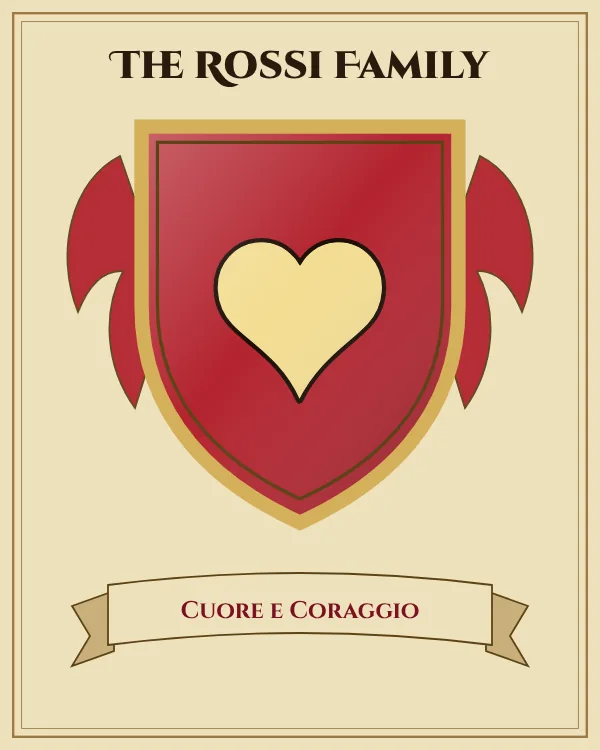
Cuore e Coraggio
Customize this crest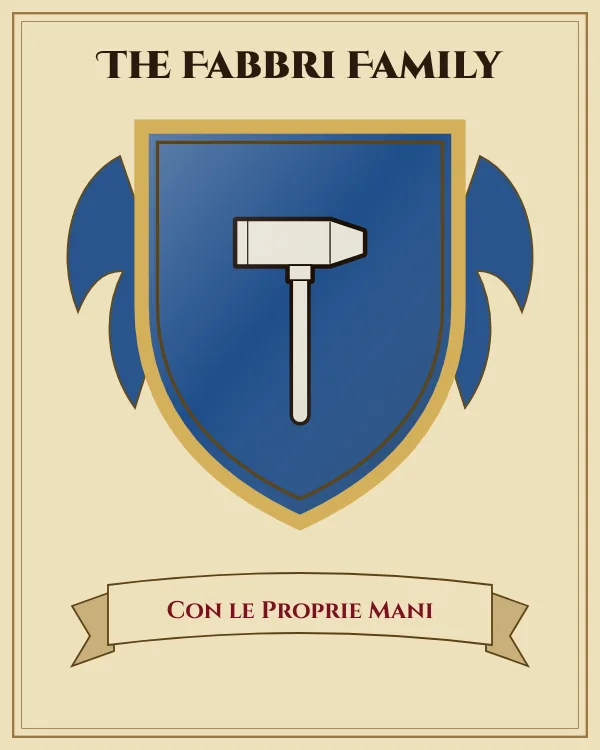
Con le Proprie Mani
Customize this crest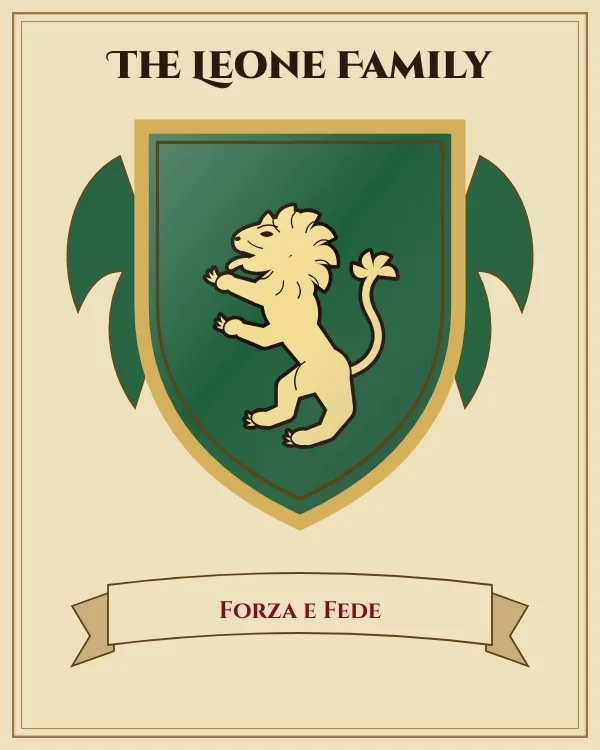
Forza e Fede
Customize this crest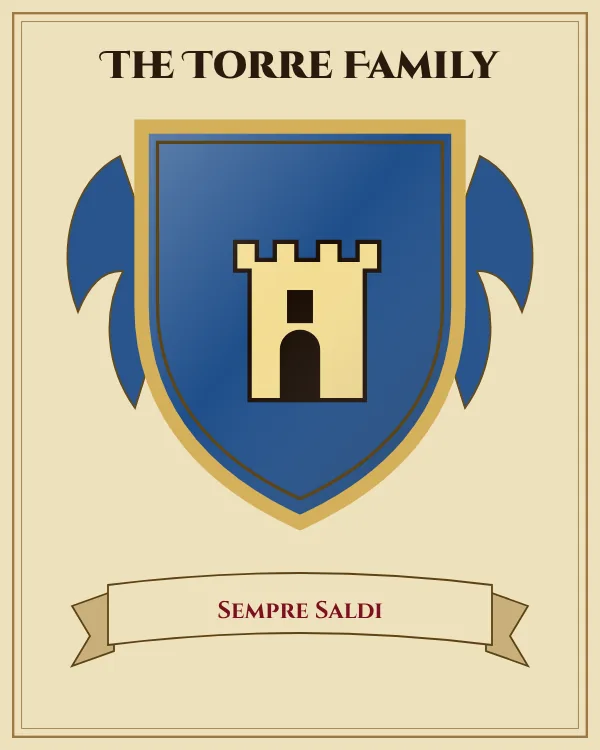
Sempre Saldi
Customize this crest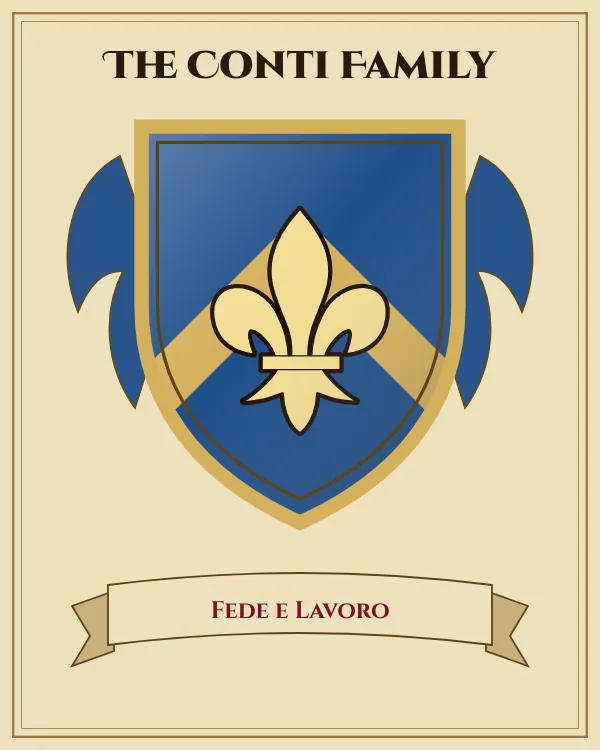
Fede e Lavoro
Customize this crestStemma: the Italian coat of arms
The Italian word for a coat of arms is stemma (plural stemmi), and a family coat of arms is a stemma di famiglia. Heraldry began in the 12th century as a way to tell armored knights apart, and in most of Europe it stayed closely tied to the nobility. Italy took a slightly different path. In its wealthy city-states, banking and merchant families adopted arms too, and they put them everywhere: carved over palace doors, painted on tombs and chapels, and stitched onto the livery of their servants. Walk through Florence, Siena or Rome today and you will see stone shields on buildings all over the old town.
That city culture is why Italian heraldry feels so personal. A stemma marked a family's house, its church and its business, and it was meant to be seen by neighbors every day. Designing a crest for your own family, to hang at home or print for a reunion, sits comfortably in that tradition.
First, the honest part about surnames
Many websites will sell you "the Rossi coat of arms" as if one design belonged to everyone named Rossi. It does not work that way in Italy any more than anywhere else. A stemma belonged to a particular family line, and Rossi, Russo, Esposito, Bianchi, Romano and Colombo are each shared today by many unrelated families across the country. Most Italian ancestors never bore arms at all.
There is also no office in modern Italy that grants arms to families. From 1869 the Kingdom of Italy had the Consulta Araldica, a government body that advised on noble titles and arms. It was dissolved after the Constitution of the Italian Republic took effect in 1948 and the state stopped recognizing titles of nobility. A small heraldic office in the Prime Minister's department still deals with public arms, such as those of towns and provinces, but not with private families.
So if your family has a documented stemma, it is worth researching through parish, notarial and civic records. If not, the honest and more personal choice is to design your own: your surname, your colors and a motto your family actually lives by. Do not copy the arms of a historical family or a city exactly, because they belong to someone else.
Canting arms: the Italian visual pun
Italian heralds call them armi parlanti, "speaking arms": a picture that sounds out the name. They are some of the most charming shields in Italy:
- Della Rovere: the family of Popes Sixtus IV and Julius II bore an oak tree, because rovere means oak.
- Colonna: one of the oldest Roman families bears a silver column on red, crowned in gold. Colonna means column.
- Turin: the city of Torino shows a golden bull, toro, on blue. The bull appears in the city's statutes as early as 1360.
Your surname may give you a ready-made canting crest. Leone means lion, Torre means tower and Colombo means dove. Many common Italian surnames come from trades or descriptions: Fabbri and Ferraro come from words for a smith, which suits a hammer, and Rossi most likely began as a nickname for someone with red hair, which suits a red field. The last-name crest generator can suggest a starting design from your surname, and the lion coat of arms guide explains the most popular beast of all.
Guelphs, Ghibellines and the chief
Medieval Italy was split between two political camps: the Guelphs, who sided with the pope, and the Ghibellines, who sided with the Holy Roman Emperor. Families and towns often showed their side in the chief, a band across the top of the shield. A Guelph chief was blue with golden fleurs-de-lis and a red label, drawn from the arms of the Angevin kings of Naples. A Ghibelline chief was gold with a black eagle, the emperor's bird. You will see both on shields all over Italy.
You do not have to pick a medieval party, but the idea is a lovely one to borrow. A gold fleur-de-lis on blue gives a crest an instantly Italian Renaissance look, and an eagle recalls the imperial side; see the eagle coat of arms guide.
Italian heraldic colors and mottos
Italian heraldry uses two metals, oro (gold) and argento (silver), and the colors rosso (red), azzurro (blue), verde (green), nero (black) and porpora (purple). Blue and gold is the classic Italian combination, and red and silver is close behind. Every example on this page keeps heraldry's rule of tincture, a metal on a color and never color on color, so it reads clearly from across a room. The meanings guide explains what each color and emblem traditionally stands for.
A motto is optional, but it is where a family's voice comes through. Write it in Italian, in English, or in Latin, which many Italian families used. The Della Rovere motto was Audentes Fortuna iuvat, "Fortune favors the bold", and the Latin motto generator has dozens more with translations. Short Italian lines such as Cuore e Coraggio (heart and courage) or Sempre Saldi (always steadfast) work well too. Mottos in the Studio can be up to 48 characters.
Questions
What is the Italian word for family crest?
Stemma di famiglia, or simply stemma (plural stemmi) for a coat of arms. Arms that make a picture pun on a name are called armi parlanti.
Does my Italian surname have its own coat of arms?
Not as a surname. A stemma belonged to one family line, and common names such as Rossi, Russo and Esposito are shared by many unrelated families. If your own ancestors bore arms, records may show it; otherwise designing your own crest is the honest option.
Can I get an official coat of arms from the Italian government?
No. The Consulta Araldica, which advised the Kingdom of Italy on titles and arms, was dissolved after the 1948 Constitution, and the Republic does not grant arms to private families. A crest you design is personal artwork, not an official grant.
What do Guelph and Ghibelline chiefs mean?
They show medieval political loyalty. A Guelph chief, blue with gold fleurs-de-lis and a red label, sided with the pope. A Ghibelline chief, gold with a black eagle, sided with the Holy Roman Emperor.
What colors are typical in Italian heraldry?
The same metals and colors as elsewhere in Europe: oro, argento, rosso, azzurro, verde, nero and porpora. Blue with gold is especially common on Italian shields.
Free to play, no download
Medieval games
Take a break from heraldry: eight free games, from a trebuchet siege to Viking chess. Your coat of arms rides with you in every one.
 The Usurper
 Trebuchet siege
 Viking chess
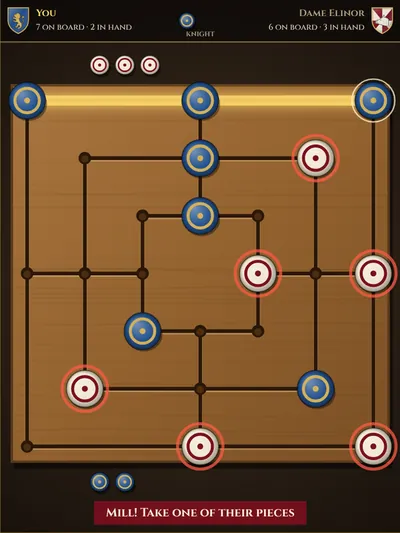 Nine Men's Morris