A plain-English guide to heraldic language
How to Read (and Write) a Blazon
"Azure, a chevron Argent, overall a mullet Argent." That line is a blazon: a complete description of a coat of arms, short enough to fit in a sentence and precise enough that someone who has never seen the shield can draw it. Here is how to read one, word by word. Designing is free and needs no account. When you love it, $9 gets the whole set: print-ready art (4000 px PNG and SVG), a certificate of arms explaining its meaning, a profile picture and a phone wallpaper. For a family gift or a wax seal, the $19 Heirloom set adds an engraving, seal, bookplates and a house banner. For a club, team or business, the $29 Logo Kit adds logo, icon, banner and brand files.
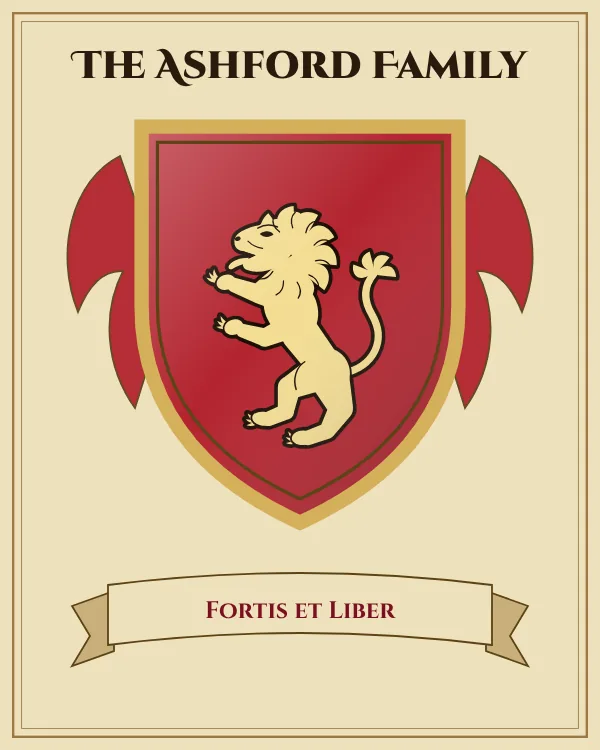
Fortis et Liber
Customize this crest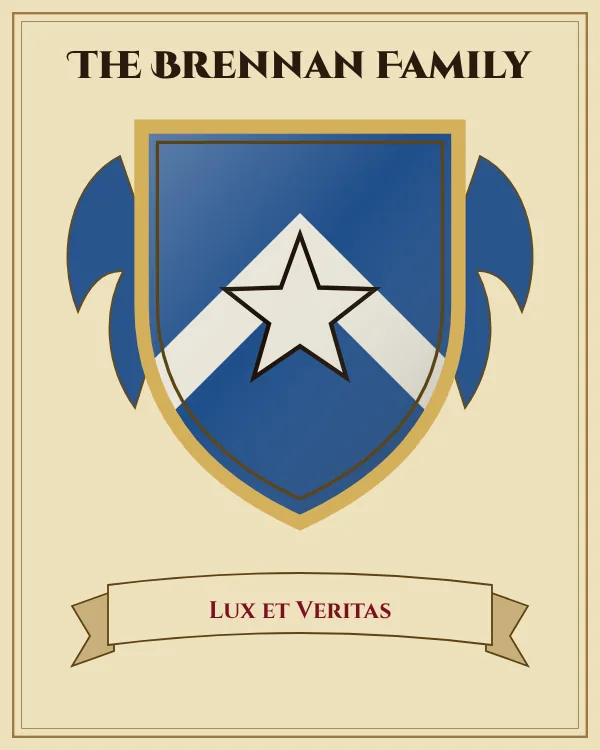
Lux et Veritas
Customize this crest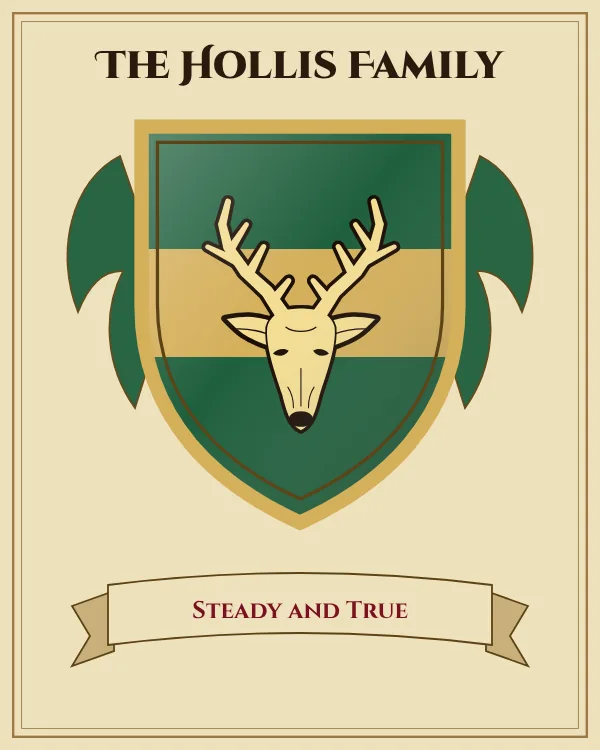
Steady and True
Customize this crest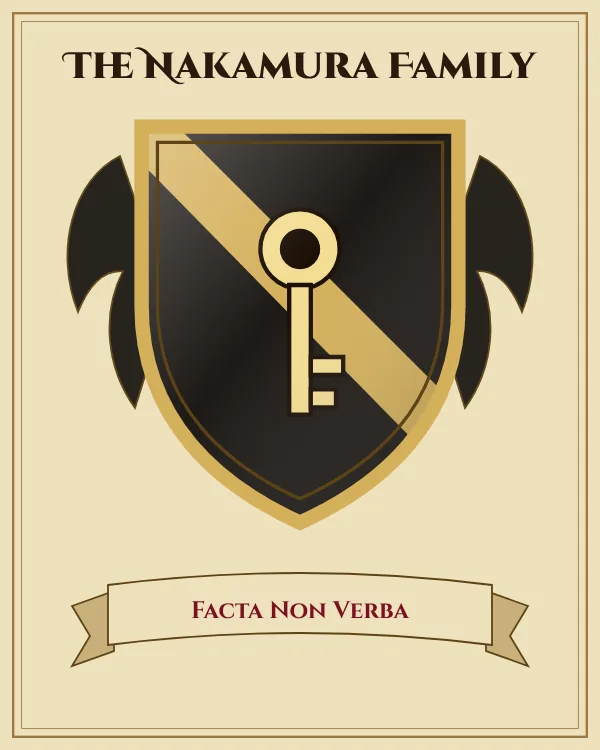
Facta Non Verba
Customize this crest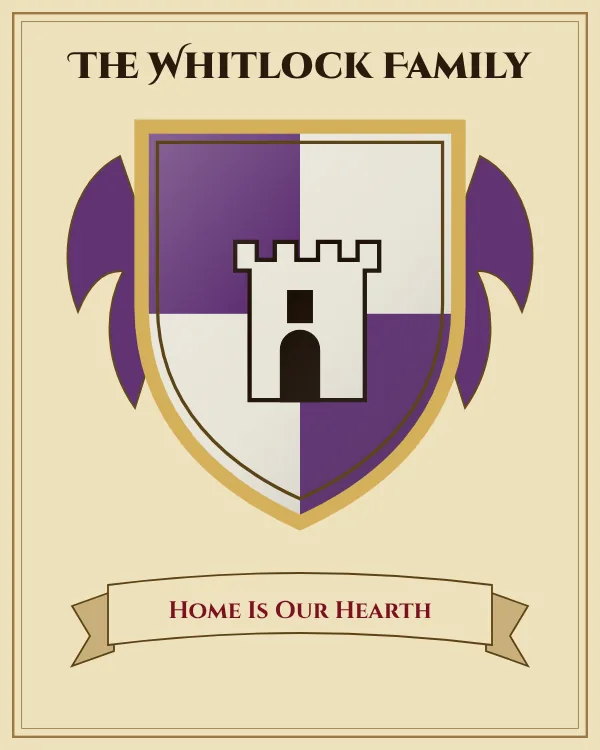
Home Is Our Hearth
Customize this crest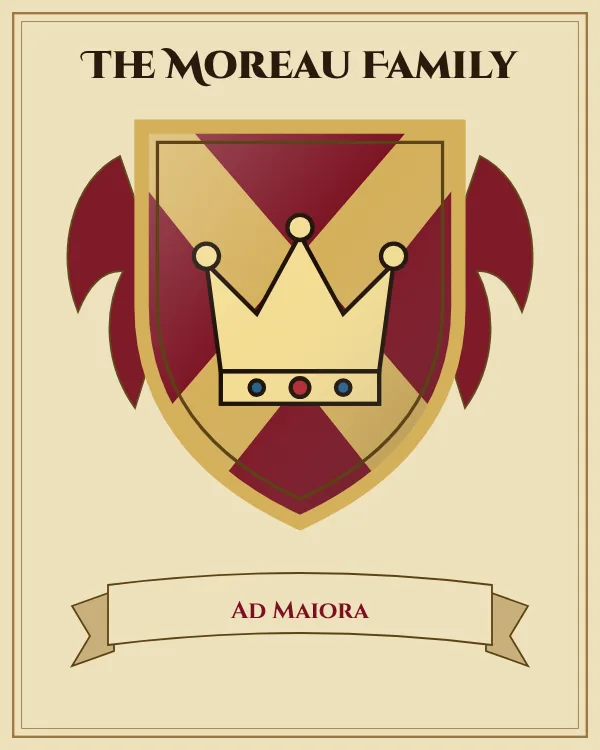
Ad Maiora
Customize this crestWhat a blazon is
A blazon is the formal written description of a coat of arms. Heralds wrote arms down in words long before anyone could print a color picture, so the language had to be exact: anyone reading the blazon should be able to draw the shield correctly. Turning the words back into a picture is called emblazoning.
The vocabulary looks strange because much of it is old French. English heralds of the Middle Ages wrote in Anglo-Norman French, and the word "blazon" itself comes from the French blason. The style aims to be as short as possible, to leave no room for doubt, and to avoid repeating itself. Once you know the handful of rules below, most blazons read like a simple recipe.
Every design you make in Crest Studio shows its own blazon under the shield, updated as you change it, and the certificate of arms prints it in full. The six example crests on this page are shown with the exact blazons the Studio writes for them.
The order: field, then ordinary, then charge
A blazon almost always follows the same order:
- The field. The background of the shield comes first, by its color, or by how it is divided, such as "Per pale" or "Quarterly".
- The main ordinary or charge. Next comes the most important thing placed on the field, with its color after it: "a chevron Argent", "a lion rampant Or".
- Anything else. Smaller charges, or a charge set on top of the ordinary, come last.
Notice that in English blazon the color usually follows the thing it describes: "a lion rampant Or" means a gold lion, not "an Or lion". For animals, the pose comes before the color, so "rampant" sits between "lion" and "Or".
Here is the opening example, taken apart:
- Azure, the field is blue.
- a chevron Argent, a silver band shaped like an upside-down V crosses it.
- overall a mullet Argent. A silver star is placed over everything, on top of the chevron.
Older blazons sometimes avoid naming a color twice with phrases like "of the field" (the same color as the background) or "of the first" (the first color mentioned). The College of Arms now avoids these conventions, and the Studio always names each color in full, which is easier to read.
The colors: tinctures, metals and stains
Heraldic colors are called tinctures, and each has a name of its own:
- Metals: Or (gold or yellow) and Argent (silver or white).
- Colors: Gules (red), Azure (blue), Vert (green), Purpure (purple) and Sable (black).
- Stains: rarer shades such as Murrey (a mulberry red), Sanguine (blood red) and Tenné (orange-brown). They behave like colors.
- Proper: a charge shown in its natural colors, like a brown owl or a green tree.
The rule of tincture says a metal should go on a color, or a color on a metal, never color on color or metal on metal. It is a contrast rule, so arms can be read from a distance. You can check it straight from a blazon: in "Sable, a bend Or" the gold bend sits on black, which passes.
Divisions and ordinaries: "per fess" is not "a fess"
This is the distinction that trips up most beginners. A word with "per" in front of it describes how the field is split. The same word without "per" names a band laid on top of the field.
- Per pale splits the shield down the middle; a pale is a vertical stripe down the center.
- Per fess splits the shield across the middle; a fess is a horizontal band across it.
- Per bend splits it on the diagonal; a bend is a diagonal band from the top left (as you look at it) to the bottom right.
- A chevron is an upside-down V, and a saltire is an X-shaped cross.
- Quarterly divides the shield into four parts.
Those bands (fess, pale, bend, chevron, saltire, cross and a few others) are called ordinaries, and they are among the oldest elements in heraldry. When the Studio places an emblem on top of one, the blazon says "overall", as in "Vert, a fess Or, overall a stag's head caboshed Or".
Left and right: dexter and sinister
Heraldry describes sides from the point of view of the person holding the shield, not the person looking at it. Dexter is the bearer's right, which is the viewer's left. Sinister is the bearer's left, the viewer's right. So "Per bend sinister" runs the other way from "Per bend", and a lion facing dexter looks toward your left as you view it, which is the usual direction.
Poses and special words for charges
Charges, the emblems on the shield, come with their own words for position and shape. These are the ones you will meet most often, including every one the Studio uses:
- Rampant: standing on one hind leg, forepaws raised, as in "a lion rampant". A griffin in the same pose is segreant.
- Passant: walking, with one forepaw raised.
- Displayed: a bird facing out with wings spread, as in "an eagle displayed".
- Volant: flying, as in "a bee volant".
- Caboshed: an animal's head facing straight out, cut off with no neck showing, the usual way to show a stag's head.
- Couped and erased: a head cut off cleanly, or torn off with a jagged edge.
- Erect: upright, as in "a sword erect".
- Eradicated: a tree shown torn up with its roots. Slipped and leaved: a plant with its stalk and leaves.
- Mullet: a star. Garb: a sheaf of wheat. Lymphad: an old oared galley with a sail. Decrescent: a crescent moon, named for which way its horns point.
Numbers come before the charge, so a shield with three gold anchors on blue is "Azure, three anchors Or". The symbols and meanings guide explains what each tincture and emblem has traditionally been said to stand for.
Practice: read these six
Cover the pictures above and try to draw each shield from its blazon, then check:
- Gules, a lion rampant Or. A gold rearing lion on red.
- Azure, a chevron Argent, overall a mullet Argent. A silver chevron on blue, with a silver star over it.
- Vert, a fess Or, overall a stag's head caboshed Or. A gold band across green, with a front-facing gold stag's head over it.
- Sable, a bend Or, overall a key Or. A gold diagonal band on black, with a gold key.
- Quarterly Purpure and Argent, a tower Argent. A shield in four quarters of purple and silver, with a silver tower.
- Murrey, a saltire Or, overall a crown Or. A gold X-shaped cross on mulberry red, with a gold crown.
A blazon describes only the arms. The motto, the helm and the name are not part of it, which is why two families can use the same motto on different shields. If you are unsure what to call your design in the first place, the coat of arms vs crest guide sorts out the words.
Questions
What is a blazon in heraldry?
A blazon is the formal written description of a coat of arms, using heraldic terms for the colors, divisions and emblems. It is written so that someone who has never seen the arms could draw them correctly.
In what order is a coat of arms blazoned?
The field (background) comes first, then the main ordinary or charge with its color, then any other charges. For example, "Azure, a chevron Argent, overall a mullet Argent" names the blue field, then the silver chevron, then the silver star over it.
Why does the color come after the charge?
Blazon grew out of Anglo-Norman French, where an adjective usually follows its noun. So heralds write "a lion rampant Or" for a gold lion, with the pose before the color.
What do dexter and sinister mean?
Dexter is the right side of the shield from the point of view of the person holding it, which is the left side as you look at it. Sinister is the other side. Heraldic directions are always given from the bearer's point of view.
Does a blazon include the motto?
No. A blazon describes the arms on the shield. The motto, the helm, the crest and any supporters are described separately, if at all. Crest Studio adds a line about supporters when you choose them.
Free to play, no download
Medieval games
Take a break from heraldry: eight free games, from a trebuchet siege to Viking chess. Your coat of arms rides with you in every one.
 The Usurper
 Trebuchet siege
 Viking chess
 Nine Men's Morris